

Welcome all to the new era of Science and Technology. There have been a lot of advancements in Science and Technology till now. So, we are here to get updated with all latest technologies and innovations. It’s going to be an interesting journey with you all!

Learning Sciences (LS) is an interdisciplinary field that works to further scientific, humanistic and critical theoretical understanding of learning as well as get involved in the design and implementation of innovations, and the improvement of instructional methods. Research in the learning sciences basically focuses on cognitive-psychological, social-psychological, cultural-psychological and critical theoretical foundations of human learning, as well as on designing of learning environments. Major contributing fields include cognitive science, educational psychology, computer science, applied linguistics and anthropology . Over the past decade, researchers have also expanded their concentrate to the design of curricula, informal learning environments, instructional methods, and policy innovations.
Why to Learn Science and get in touch with latest technologies?
Science and technology are closely related with our lives. They are closely linked aspects of society and the studies and developments in both these fields are very essential for the overall progress of mankind and humanity.
Scientific research mainly comprises of a wide variety of fields ranging from the study of different branches of science to relatively advanced fields like space exploration, Artificial Intelligence, Machine Learning, human genetics, and cloning. Scientific study attempts to explore and understand and innovate the working of the physical world. It tries to analyze and the occurrences in nature and gain knowledge about nature through experimentation. As scientific research targets at acquiring knowledge of the complexities in nature and finding solutions to unsolved problems, it is important for the progress of mankind. The seemingly impossible feats have been made possible, pay credit to scientific research and innovations in Technology.
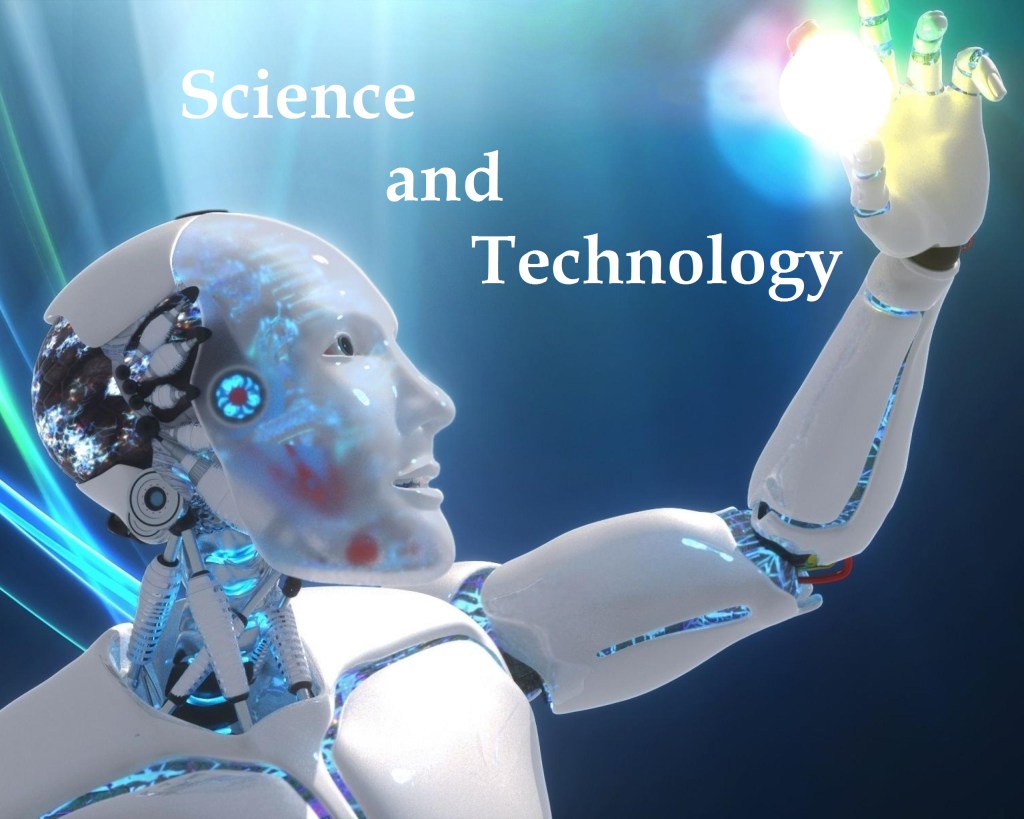
Types of Science studies:
- Natural Sciences.
- Artificial Sciences.
Natural sciences are concerned with the study of nature and human life. The Artificial Sciences deal with developing and inventing the new devices, scientific products, medicines, artificial technologies machines and infrastructure. The studies of natural and artificial sciences reveal the relationships between nature and human life. Research in science has paved a path to many brilliant inventions and discoveries.
The importance of technology resides in its manifold benefits to society. There are many positive effects of technology . The advancement in this area has revolutionized human life. It has provided an impetus to the computer and the telecommunication industry. The developments in communication technology have made the world a smaller place connecting every corner of the world. The Internet serving as an excellent communication platform has made the world flat and an easier to live place.
The World Wide Web has proved to be an enormous information network foundation, from which information can be retrieved by the means of search engines. Information from all around the world is clubbed and hosted on the web. Pay credits to development of web technology, the information can be stored in an organized manner and relevant information can be retrieved on supplying search strings to web search engines.
Digitization of information has been a major breakthrough in the world of information technology. It has made possible the compact storing of information, which in turn allows efficient information storage.
The most important benefit of science has been the luxury it has brought to daily life. The automation and machine advancement of industrial processes has reduced human efforts. Household appliances and and innovative products that are in daily use of the common man are a result of developments in science. Machines can do monotonous and risk-bearing tasks and hence protecting man from monotonous as well as dangerous but yet important tasks . Scientific discoveries have made human life easy and luxurious.
Without Science and Technology human life is almost unstable and meaningless.
Hope you enjoy the post! please drop your comments in below comments section. 🙂 Thank you for reading!



 StellarRimz